The Seoul Subway Staircase Trap: Heavy Luggage vs Same-Day Airport Delivery
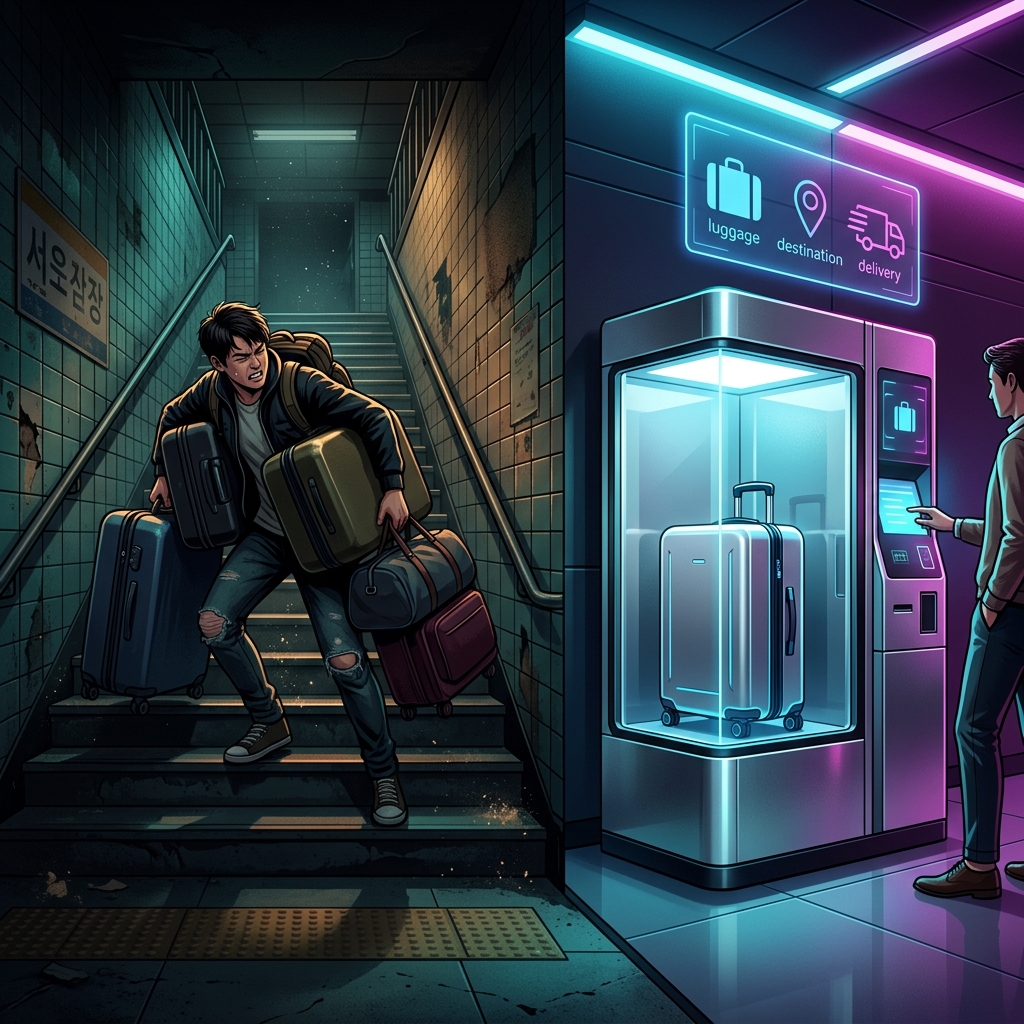
Navigating the historic core of Seoul with bulk luggage is one of the fastest ways to exhaust your physical energy before your vacation even starts. While the capital city boasts a world-class public transit network, over 30% of the older subway stations built in the 1970s and 1980s lack seamless elevator infrastructure from the deep platforms directly to the street exits. Inbound traveler volume audits show that post-midnight and early morning passenger surges amplify station bottleneck delays.
"I thought taking the subway to my hotel in Myeongdong with two 28-inch suitcases would be easy because the map showed a direct line. I was completely wrong. Transferring stations required walking up three flights of steep concrete stairs with zero elevators in sight. My back is thrown out on day one." — Aggregated from Reddit r/KoreaTravel luggage transport logs.
Below is the infrastructure matrix comparing self-handling luggage transit against authorized same-day hands-free delivery services. This aligns with actual municipal transit schedules and airport authority service logs.
| Logistics Path | Average Cost per Bag | Physical Exhaustion Risk | Transfer Bottlenecks | Best For |
|---|---|---|---|---|
| DIY Subway Dragging | Free (Standard Metro Fare) | Critical (Stairs, Turnstiles) | High (Line 2 & Line 4 Transfer Tunnels) | Backpackers, minimal luggage travelers |
| Same-Day Delivery (ZimCarry / Safex) | KRW 20,000 - 26,000 (~$15 - $19) | Zero (Hands-Free) | None (Direct Terminal to Hotel Desk) | Families, senior citizens, multi-bag shoppers |
| Airport Limousine Bus | KRW 16,000 - 17,000 (~$12 - $13) | Medium (Lower compartment storage) | Road congestion delays during rush hour | Travelers staying directly next to roadside stops |
The Physical Friction Analysis
The Infrastructure Gap: Transit entry audits reveal that popular tourist hubs like Dongdaemun History & Culture Park or Jongno 3-ga require walking up to 400 meters underground just to change lines. Dragging heavy wheels across these extended tiled corridors during the morning rush hour (08:00 - 09:30) creates extreme friction with local commuters. Travelers who attempt manual hauling on arrival day frequently experience severe exhaustion.
The Hands-Free Solution: Utilizing an official airport-to-hotel baggage delivery network allows you to drop your bags at the Incheon terminal counter immediately after clearing customs. Your bags are securely logged, tracked via a digital receipt system, and dropped at your central Seoul hotel front desk by 18:00. This opens up an extra 5 hours of unencumbered sightseeing on your arrival day, bypassing street and station transit issues entirely.
Avoiding the Subway Staircase Trap
Before committing to dragging your bags through the turnstiles, you must evaluate your arrival station layout. Managing your baggage seamlessly requires matching your destination with the right transit infrastructure. To protect your physical energy for the trip, check here to review the specific luggage delivery cut-off times and tracking protocols. Pre-arranging luggage delivery remains the single most effective way to eliminate arrival day stress.
📍 Seoul Travel Coordination & Main Navigation:
☞ HeroHaunt Official Hub
⚡ Verified Zero-Fee Cards & Safe ATM Locations:
☞ View in the Comment Section below


Comments
Post a Comment